In any professional PA system or DJ speaker cabinet, the transducer — the speaker driver inside the enclosure — is the component that does the fundamental work of converting electrical energy from the amplifier into acoustic sound waves. Everything else in your system — the amplifier power, the cabinet design, the crossover settings — ultimately serves the transducer. Choosing the right speaker driver determines the maximum output, tonal character, efficiency, and long-term durability of your entire sound system.
For professional DJs, sound rental companies, live sound engineers, and speaker cabinet builders across West Bengal, Odisha, Assam, Bihar, and Tripura, understanding speaker transducer specifications is essential to making smart purchasing decisions. This guide covers everything you need to know — from the fundamental choice between ferrite and neodymium magnets to power handling, sensitivity, impedance, and how to match drivers to your specific application.
What Is a Speaker Transducer?
A speaker transducer — also called a driver, woofer, or raw speaker — is the electromechanical device that converts an amplified electrical signal into physical air movement, which we hear as sound. The transducer consists of several key components working together:
- The cone (diaphragm) — the large paper, fibre, or composite surface that moves air to produce sound
- The voice coil — a copper or aluminium coil wound around a former, suspended in the magnetic gap
- The magnet assembly — creates the permanent magnetic field in which the voice coil operates
- The spider and surround — flexible suspension components that allow the cone to move freely while returning it to the rest position
- The chassis (basket) — the structural frame that holds all components in precise alignment
When amplified audio current flows through the voice coil, the interaction with the permanent magnetic field creates a force (the Lorentz force) that moves the coil and the attached cone back and forth. This cone movement creates the pressure variations in the air that we perceive as sound. The quality of every component in this assembly determines the overall performance and durability of the speaker driver.
The Fundamental Choice: Ferrite vs Neodymium Magnets
The magnet assembly is the core differentiator in professional speaker transducers. Two magnet technologies dominate the professional audio market: ferrite (also called ceramic) and neodymium. Understanding the practical differences between them is essential for any professional in India selecting speaker drivers for their PA system or cabinet build.
Ferrite (Ceramic) Magnets — The Traditional Standard
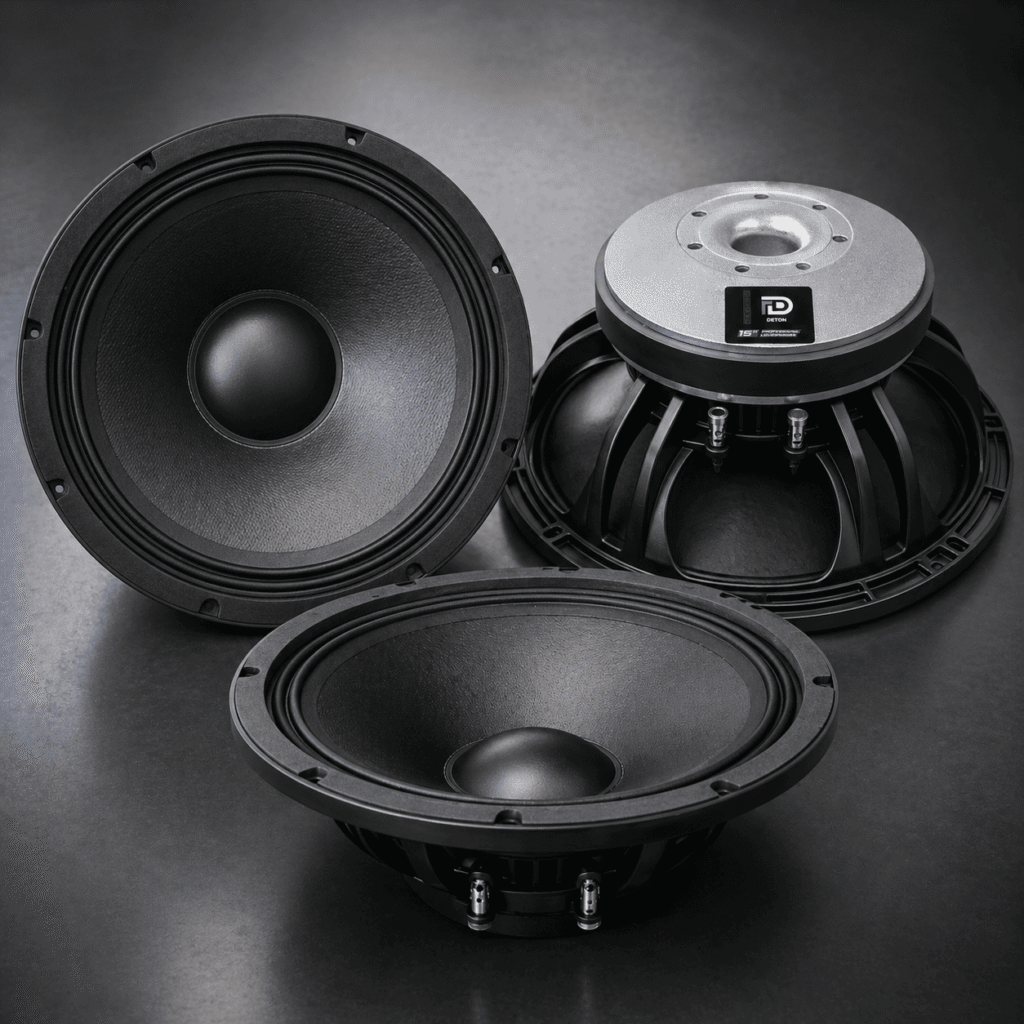
Ferrite magnets are manufactured from iron oxide compounds combined with barium or strontium. They have been used in professional speaker transducers for decades and remain a popular choice for many applications. The Deton DS 15M 99 is a professional 15-inch ferrite woofer built for high power handling and consistent bass output in professional PA and DJ applications.
Key Characteristics of Ferrite Speaker Drivers
- Higher magnetic mass — ferrite magnets are physically larger and heavier than neodymium magnets of equivalent strength, resulting in heavier overall driver weight
- Lower cost — ferrite is significantly less expensive to produce than neodymium, making ferrite drivers more affordable at equivalent power ratings
- Thermal stability — ferrite magnets are less affected by high temperatures than neodymium, making them well-suited to high-power, long-duration applications in India’s warm climate
- Proven long-term reliability — decades of use in professional touring and installation applications have established ferrite as a dependable, well-understood technology
- Well suited to subwoofer applications — the heavy magnet assembly of ferrite drivers adds acoustic mass that can be beneficial for deep subwoofer designs
Neodymium Magnets — Modern High Efficiency Design
Neodymium is a rare earth element that produces the strongest permanent magnets available. Neodymium magnets deliver the same or greater magnetic flux as ferrite magnets in a fraction of the size and weight. The Deton DS 15N 51 and DS 15N 38 are professional 15-inch neodymium woofers engineered for high efficiency, strong bass, and reduced system weight for professional PA and DJ applications.
Key Characteristics of Neodymium Speaker Drivers
- Dramatically reduced weight — neodymium drivers can weigh 30 to 50% less than equivalent ferrite drivers, a significant advantage for portable DJ systems and touring setups
- High efficiency — neodymium’s stronger magnetic field improves the electromechanical coupling efficiency, meaning neodymium drivers typically have higher sensitivity ratings (more dB output per watt of input)
- Compact magnet assembly — allows more compact driver designs and enclosure geometries
- Higher initial cost — neodymium raw material is more expensive than ferrite, reflected in the driver price
- Ideal for portable and touring systems — the weight saving makes neodymium drivers the preferred choice for DJ companies and touring sound companies across India who move equipment frequently
Ferrite vs Neodymium — Direct Comparison
| Factor | Ferrite (DS 15M 99) | Neodymium (DS 15N 51 / 15N 38) |
| Magnet Weight | Heavy — large magnet assembly | Light — compact high-strength magnet |
| Driver Weight | Heavier overall (typical 10–15 kg+) | Lighter overall (typical 6–9 kg) |
| Sensitivity | Good (95–98 dB typical) | High (97–101 dB typical) |
| Cost | Lower — ferrite is inexpensive | Higher — neodymium material cost |
| Thermal Stability | Excellent — stable in high heat | Good — slightly sensitive to extreme heat |
| Power Handling | Excellent at high continuous power | Excellent at high continuous power |
| Best For | Fixed installations, subwoofers | Portable DJ, touring, weight-sensitive |
| Lifespan | Very long with normal use | Very long with normal use |
| Availability | Widely available across India | Widely available at quality dealers |
| Deton Model | DS 15M 99 | DS 15N 51 / DS 15N 38 |
Critical Speaker Specifications Explained
Continuous Power Handling (RMS)
Continuous power handling — also called RMS (Root Mean Square) power — is the most important power specification. It represents the amount of amplifier power the driver can handle continuously during normal music programme material without damage. The Deton DS 15N 51 handles 650W continuous power — meaning a properly matched amplifier delivering 650W RMS into this driver can operate safely for extended periods.
Always match your amplifier’s RMS output to the speaker’s continuous power handling. As a general professional guideline, the amplifier should deliver between 100% and 150% of the speaker’s continuous power rating. Under this rule, the DS 15N 51 (650W continuous) pairs well with an amplifier delivering 650W to 975W RMS per channel. This provides adequate headroom for dynamic peaks while preventing over-excursion damage.
Program Power Handling
Program power handling (typically 2× continuous RMS) represents the driver’s ability to handle short-term peaks in real-world musical content, which has significant dynamic range above the average continuous level. The DS 15N 51’s program power rating of 1300W indicates it can handle 1300W peak transients safely during typical music playback — important for the punchy bass transients common in Bollywood, dance, and DJ music at events across West Bengal.
Sensitivity
Sensitivity is measured in dB SPL at 1 watt input, measured at 1 metre distance. The DS 15N 51’s 97.7 dB sensitivity means it produces 97.7 dB SPL with just 1 watt of input power. Each doubling of amplifier power adds 3 dB, so this driver produces approximately 127.7 dB at 1000W input — extremely loud by any standard.
High sensitivity is particularly important for the large outdoor events common in West Bengal — Durga Puja stages, outdoor concerts, and festival grounds — where maximum SPL coverage over large areas is required. A high-sensitivity driver gives you more acoustic output for the same amplifier power, improving system efficiency and reducing amplifier stress.
Impedance — 4 Ohm vs 8 Ohm
Impedance determines how much current the driver draws from the amplifier. Lower impedance draws more current and receives more power from the amplifier. Professional drivers are typically available in 4-ohm and 8-ohm versions:
- 8-ohm drivers are the most common standard, matched to amplifiers with 8-ohm rated outputs
- 4-ohm drivers draw more current and receive maximum power from the amplifier — used when maximum SPL output is required
- Two 8-ohm drivers wired in parallel present a 4-ohm load to the amplifier, increasing power delivery
- When building multi-driver systems, impedance matching between drivers and amplifier must be calculated carefully — contact Deton Audio for system design advice
Voice Coil — Size and Material
The voice coil is the motor of the speaker driver. Larger voice coils dissipate heat more effectively, allowing higher continuous power handling before thermal damage occurs. The DS 15N 51 uses an 85mm (3.5-inch) diameter voice coil — a professional-grade diameter that provides excellent heat dissipation for high-power live sound applications.
Voice coil material also matters: copper voice coils have higher conductivity and are common in professional drivers. The EISV (Edge-Insulated, Silver-coated Voice coil) construction used in the DS series provides excellent conductivity and thermal performance for demanding professional use.
Double Spider Construction
The spider is the flexible corrugated disc that keeps the voice coil centred in the magnetic gap while allowing it to move freely. The DS series uses a double spider construction — two spiders instead of the conventional single spider — which dramatically improves centring stability, reduces distortion under high excursion conditions, and extends long-term durability. For the sustained high-power operation required at long events in India, double spider construction is a significant reliability advantage.
Cast Aluminium Chassis vs Stamped Steel Chassis
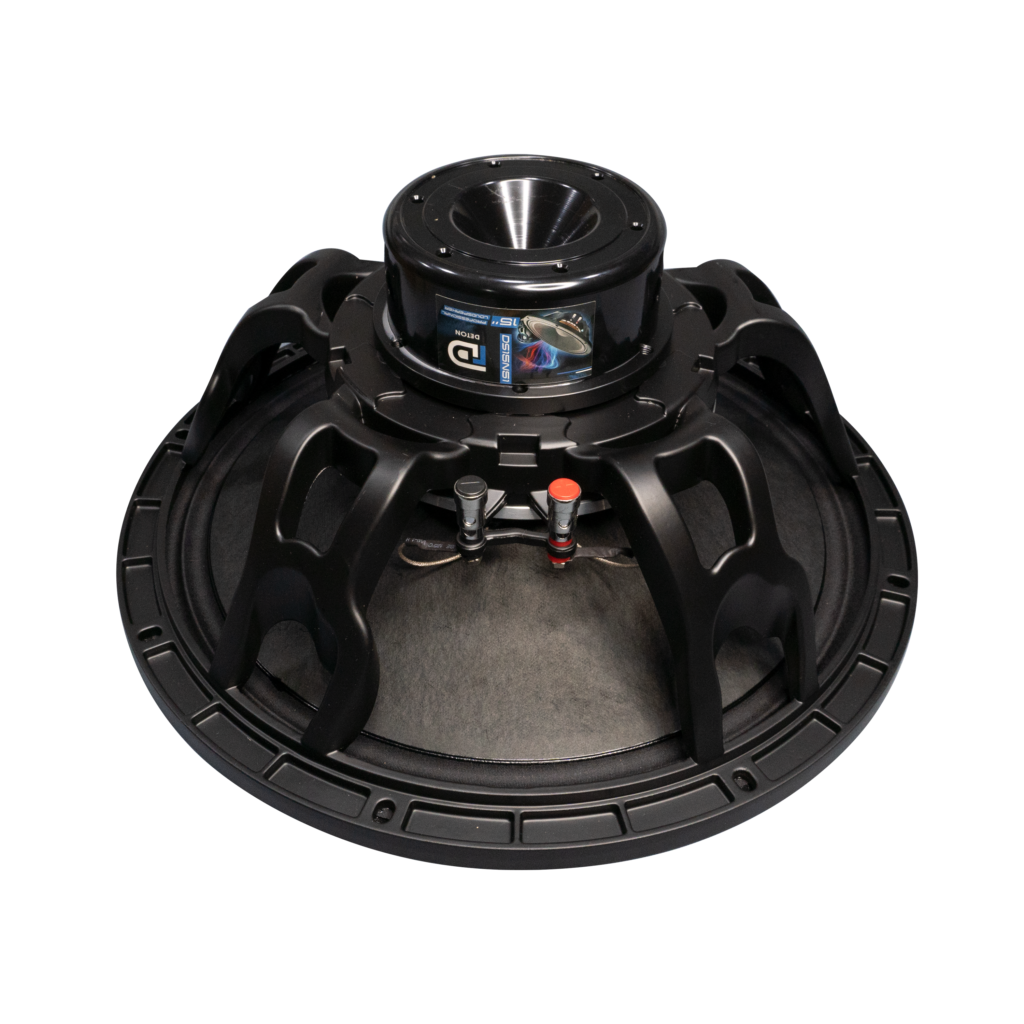
Professional speaker drivers use either cast aluminium or stamped steel chassis (baskets). Cast aluminium chassis offer superior rigidity, better heat conduction away from the voice coil, and more precise component alignment tolerances. The DS series uses heavy-duty cast aluminium chassis — ensuring the voice coil remains precisely aligned in the magnetic gap even under high-power, high-temperature operation. Stamped steel baskets are less expensive but more prone to resonance and alignment inconsistency.
The Deton DS Series — 15″ Professional Woofers
DS 15N 51 — High-Power Neodymium Woofer
The DS 15N 51 is the flagship neodymium woofer in the Deton DS series. With 650W continuous power handling, 97.7 dB sensitivity, an 85mm voice coil, double spider construction, and cast aluminium chassis — this driver is engineered for professional PA tops and mid-bass applications where maximum output and weight efficiency are required. At just 7.5 kg, it is significantly lighter than comparable ferrite drivers, making it ideal for DJ companies and touring sound systems across eastern India.
DS 15N 38 — Efficient Neodymium Mid-Bass Driver
The DS 15N 38 is a high-efficiency 15-inch neodymium woofer optimised for mid-bass performance in professional PA tops and full-range cabinet applications. Its neodymium magnet provides strong magnetic efficiency in a lightweight package, making it a popular choice for portable PA systems, DJ speaker cabinets, and touring sound setups that demand high output with manageable system weight.
DS 15M 99 — Professional Ferrite Woofer
The DS 15M 99 is a professional 15-inch ferrite woofer built for high power handling and reliable long-term operation. Its ferrite magnet assembly provides excellent thermal stability for high-power continuous operation — ideal for fixed installation applications in nightclubs, marriage halls, and banquet halls where the speaker system runs for hours daily. The DS 15M 99 is also a cost-effective choice for sound rental companies building large speaker inventories where ferrite’s lower cost per unit is advantageous.
Speaker Reconing — Extending Driver Life
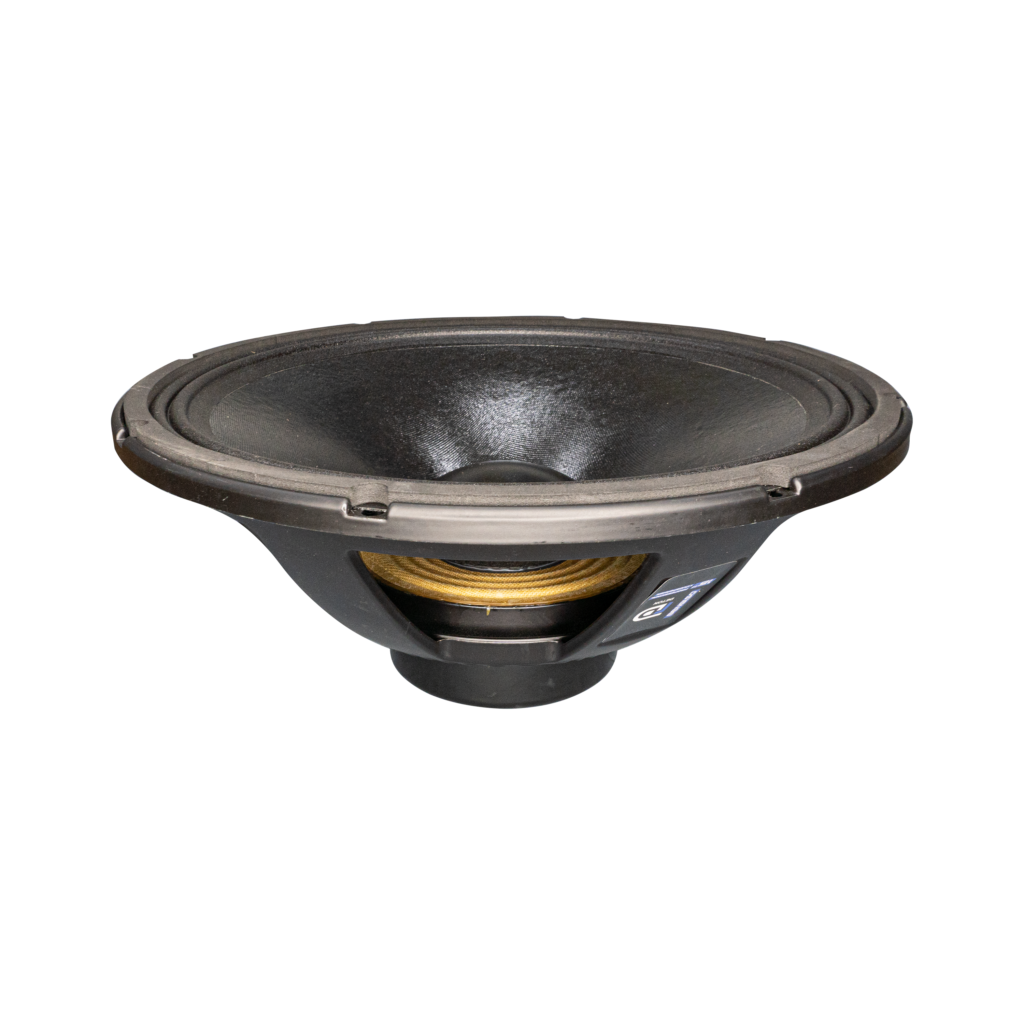
Even high-quality professional speaker drivers eventually require reconing — replacement of the cone, voice coil, and surround components — after years of professional use. Reconing restores a damaged or worn driver to original specifications at a fraction of the cost of a complete driver replacement. Deton Audio supplies genuine recone kits for 15-inch woofers, including the correct cone, voice coil, and surround for Deton DS series drivers. This makes it economically practical to maintain a professional speaker inventory over many years of use, rather than replacing entire drivers when components wear out.
Building a Complete Speaker System with Deton Transducers
For professionals building complete PA speaker systems from Deton components, here is a practical system design approach:
- Full-range PA tops: DS 15N 51 or DS 15N 38 in a quality 15-inch two-way cabinet, paired with a professional 1-inch compression driver — ideal for weddings, corporate events, and medium-scale concerts across West Bengal
- Subwoofer systems: DS 15M 99 (ferrite, for maximum power and thermal durability) in an 18-inch scoop or bass reflex enclosure — the DCA T-18 and DCA L-18 enclosures are designed specifically for 18-inch drivers
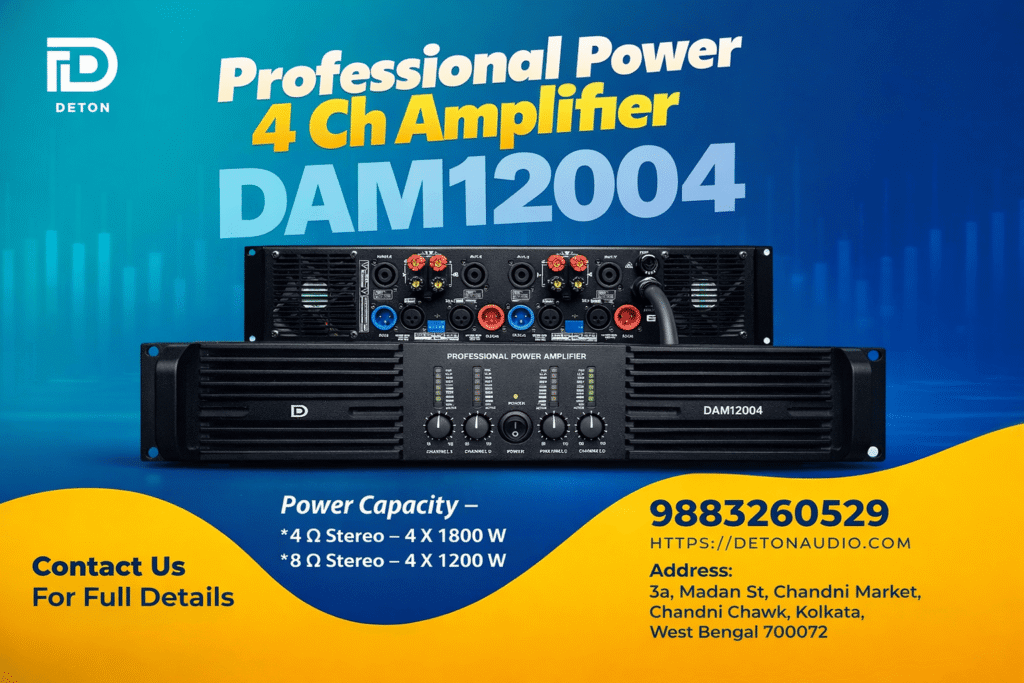
- Amplification: Match the DS 15N 51 (650W / 8Ω) with the DAM12004 (1200W @ 8Ω per channel) for headroom, or the DTA 1602 (1300W @ 8Ω per channel) for maximum output
- System processing: Use the DEAF 6.0 DSP processor for crossover, EQ, and feedback control between amplifier and speakers
Deton Audio supplies complete transducer solutions — DS series woofers, DCA enclosures, amplifiers, processors, and recone kits — to speaker builders, sound companies, and professionals across West Bengal and eastern India.
Where to Buy Professional Speaker Transducers in Kolkata
Kolkata is the primary professional audio equipment hub for eastern India. Speaker builders, sound rental companies, and DJ equipment suppliers from West Bengal, Odisha, Assam, Bihar, and Tripura source transducers from Kolkata-based dealers. Deton Audio at 3A Madan Street, Chandni Market, Esplanade is one of the few Kolkata dealers stocking professional 15-inch neodymium and ferrite woofers specifically designed for Indian professional use conditions.
For bulk orders, dealer pricing, or custom speaker system design consultation, contact the Deton Audio team directly. We can advise on driver selection, power matching, enclosure pairing, and complete system configuration for your specific application and budget.
Buy Deton DS Series Speaker Transducers in Kolkata — Call / WhatsApp: +91 98832 60529 | detonaudio.com
Conclusion
Selecting the right speaker transducer is one of the most consequential decisions in building or upgrading a professional PA or DJ speaker system. The choice between ferrite and neodymium comes down to your priorities — ferrite delivers proven reliability, thermal durability, and lower cost for fixed installations and high-power subwoofer applications; neodymium delivers high efficiency, lower weight, and compact design for portable DJ systems and touring setups.
The Deton DS series — DS 15N 51 (neodymium, 650W), DS 15N 38 (neodymium), and DS 15M 99 (ferrite) — covers both applications with professional-grade specifications designed for Indian live sound conditions. All three drivers are available from Deton Audio in Kolkata, with supply to dealers and professionals across West Bengal, Odisha, Assam, Bihar, and Tripura.