When it comes to building a powerful and reliable sound system, the amplifier is one of the most important components.
Think of the amplifier as the heart or engine of your entire audio setup. No matter how good your speakers are, if the amplifier is not properly matched, your sound will never reach its full potential.
Many buyers get confused by technical terms like wattage, impedance (Ohms), Class H, bridge mode, damping factor, and signal-to-noise ratio. But choosing the right amplifier does not have to be complicated. Let’s break everything down in simple and practical language.
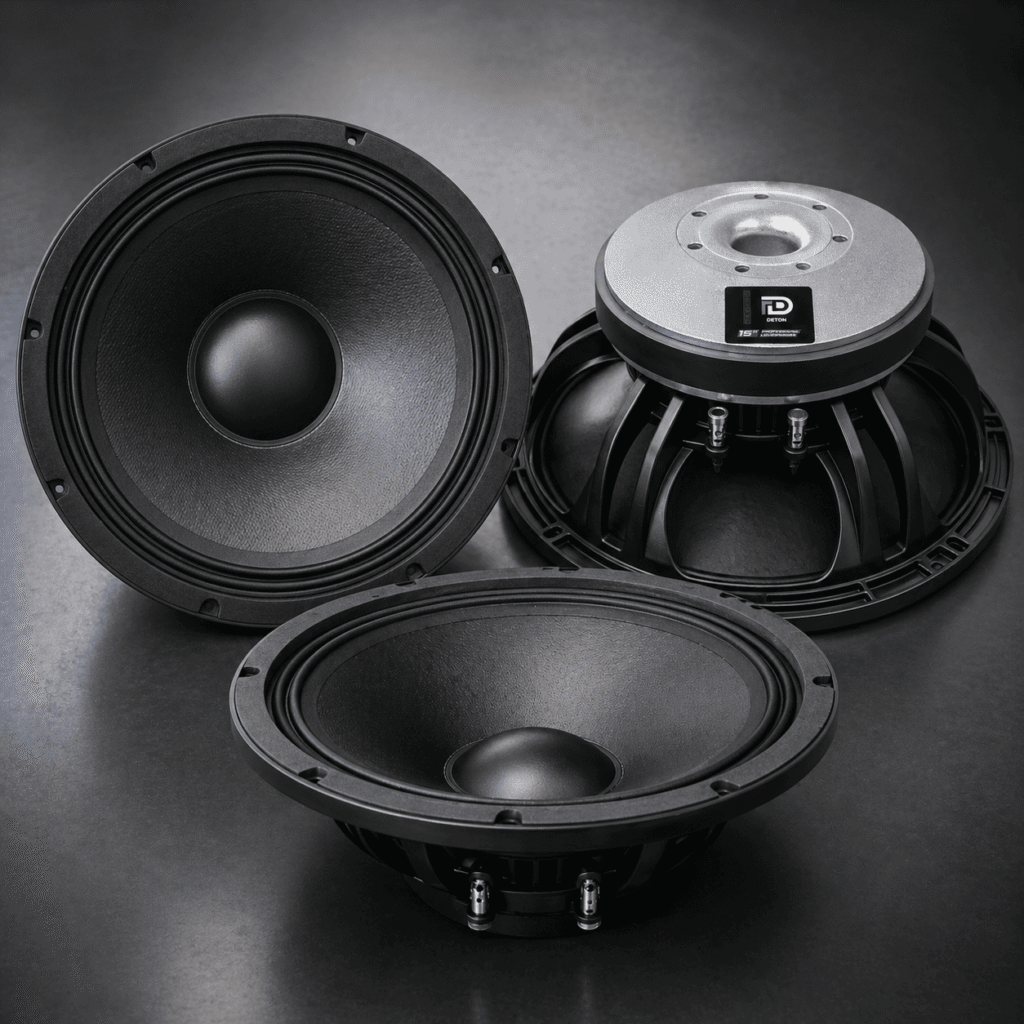
First, you need to understand power matching. Every speaker has two important ratings: continuous power and program power. Continuous power is the safe amount of power the speaker can handle for long durations. As a general rule, your amplifier should provide slightly more power than the speaker’s continuous rating. For example, if your speaker is rated at 600 watts continuous, choosing an amplifier that delivers around 800 to 1000 watts per channel is ideal. This allows clean headroom and reduces distortion.
Why is underpowering dangerous? Many people think a smaller amplifier is safer. In reality, an underpowered amplifier often clips when pushed hard. Clipping produces distorted signals that can burn the speaker’s voice coil faster than clean power.
Next comes impedance, measured in Ohms. Most professional speakers are 8 Ohm or 4 Ohm. If you connect two 8 Ohm speakers in parallel, the load becomes 4 Ohm. So your amplifier must be stable at 4 Ohm if you plan to run multiple speakers on one channel. Always check the amplifier’s rating at 8 Ohm and 4 Ohm before buying.
Another important factor is the amplifier class. Class H amplifiers are widely preferred for professional touring and DJ use. They are more efficient, generate less heat compared to older designs, and provide strong output stability.
For long events in Indian weather conditions, efficiency and cooling are extremely important.
Cooling system plays a major role in reliability. A good amplifier should have multiple cooling fans, thermal protection, short-circuit protection, and overload protection. Events often run for 5–8 hours continuously. A weak cooling system can cause shutdown during performance.
Sound quality specifications also matter. Look for low Total Harmonic Distortion (THD), ideally below 0.05%.
Signal-to-noise ratio should be above 95 dB for clean output. A high damping factor (above 300) ensures tight bass control and better speaker cone movement.
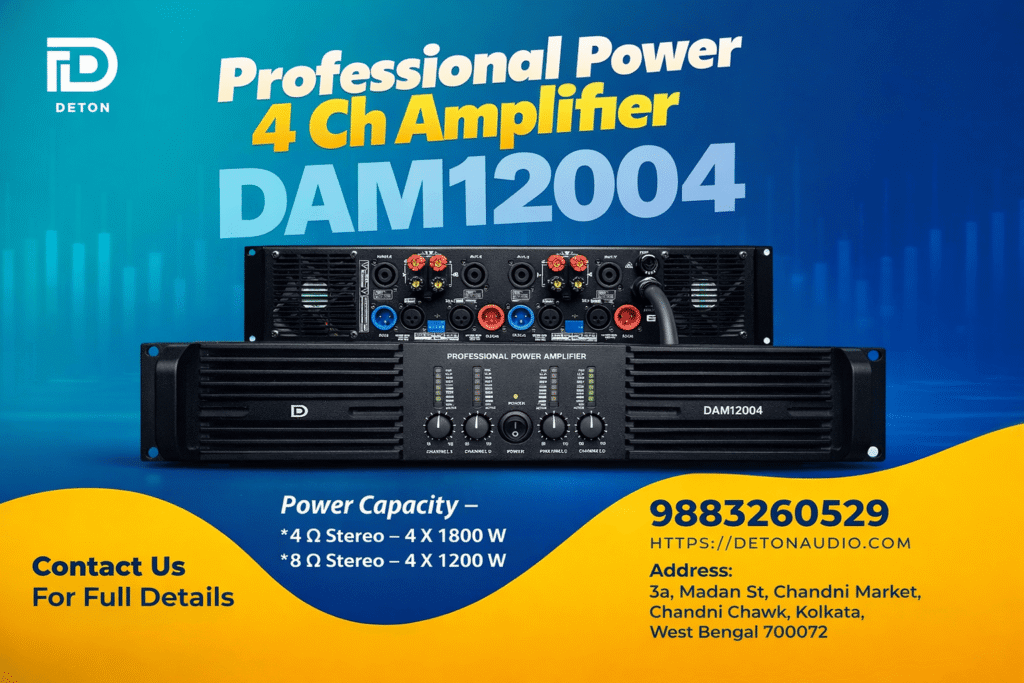
You also need to decide between 2-channel and 4-channel amplifiers. A 2-channel amplifier is suitable for smaller DJ setups or simple PA systems. A 4-channel amplifier is more flexible and is perfect for line arrays, stage monitors, or multi-zone systems. Using a 4-channel amplifier can reduce rack space and improve system organization.
Finally, always consider your application. Are you running wedding events? Outdoor political rallies? Church installations? Rental sound business? Each setup has different requirements.
The best approach is to test the amplifier with your speakers before final purchase. Check clarity at high volume, bass tightness, and heat levels after continuous running.
Choosing the right amplifier is not just about buying the biggest wattage. It is about balance, compatibility, cooling, and reliability. When properly selected, a good amplifier can serve you for many years and protect your investment in speakers.
FAQs
Q: Is it safe to use a higher watt amplifier?
A: Yes, as long as gain is properly controlled and speakers are not overdriven.
Q: Why does amplifier clipping damage speakers?
A: Clipping sends distorted signals that overheat the voice coil.
Q: What is the benefit of 4 channel amplifier?
A: It allows multiple speaker management with better flexibility.
Q: How important is damping factor?
A: It controls bass tightness and speaker movement accuracy.
Q: How long can a professional amplifier last?
A: With proper ventilation and usage, it can last many years.